Case No. 3, Mrs. K, aged 30 – this is a case that was published in Dr. Georgiou’s book entitled “Curing the Incurable with Holistic Medicine: The Da Vinci Secret Revealed.”
Main presenting problem:
Acute Gallbladder Colic due to stone obstruction
Medical diagnosis:
This patient presented with Acute Gallbladder Colic and acute pains in the liver area which reached the shoulder area. An ultrasound scan taken 8.9.08, showed: “the gallbladder is distended, with a length of 8.5 cm and a transverse diameter of 5.3 cm. There are no large gallstones evident, but there are echogenic contents in the dependent part of the gallbladder, suggestive of bile sludge (on a previous examination, small calculi were identified within the gallbladder). There is mild dilation of the common bile duct, which measures 9mm in diameter, down to the level of the ampulla of vater. The features are in keeping with a partial obstruction to the distal gallbladder, probably as a result of microlithiasis, or bile sludge.”
In addition, she presented with blood analysis taken 4.9.08 showing the following elevated enzymes:
ALT – (alanine aminotransferase) – was previously called SGPT is more specific for liver damage. The ALT is an enzyme that is produced in the liver cells (hepatocytes) therefore it is more specific for liver disease than some of the other enzymes. It is generally increased in situations where there is damage to the liver cell membranes. All types of liver inflammation can cause raised ALT. Her levels of ALT were 400 U/l which are extremely high as they should be below 32 U/l.
GTT – (gamma glutamyl transpeptidase) is often elevated in those who use alcohol or other liver toxic substances to excess. An enzyme produced in many tissues as well as the liver. It may be elevated in the serum of patients with bile duct diseases. Her GGT levels were 323 U/l which again were very high as the acceptable parameters are between 5 and 36;
AST – (aspartate aminotransferase) which was previously called SGOT. This is a mitochondrial enzyme that is also present in heart, muscle, kidney and brain therefore it is less specific for liver disease. In many cases of liver inflammation, the ALT and AST activities are elevated roughly in a 1:1 ratio. Her levels were again very elevated at 188 U/l when acceptable parameters should be below 32 U/l.
Bilirubin is the major breakdown product that results from the destruction of old red blood cells (as well as some other sources). It is removed from the blood by the liver, chemically modified by a process call conjugation, secreted into the bile, passed into the intestine and to some extent reabsorbed from the intestine. It is basically the pigment that gives faeces its brown colour. Her levels of Total bilirubin were very high at 4.7 mg/dl when acceptable parameters should be below 1 and her direct bilirubin (see explanation below) was 2.7 when acceptable parameters are closer to zero (0.0 – 0.2).
Elevated levels of bilirubin can mean:
a) Bilirubin concentrations are elevated in the blood either by increased production, decreased uptake by the liver, decreased conjugation (modification to make it water soluble), decreased secretion from the liver or blockage of the bile ducts.
b) In cases of increased production, decreased liver uptake or decreased conjugation, the unconjugated or so-called indirect bilirubin will be primarily elevated.
c) In cases of decreased secretion from the liver or bile duct obstruction, the conjugated or so-called direct bilirubin will be primarily elevated.
AP – (alkaline phosphatase) is elevated in many types of liver disease but also in non-liver related diseases. Alkaline phosphatase is an enzyme, or more precisely a family of related enzymes, that is produced in the bile ducts and sinusoidal membranes of the liver but is also present in many other tissues. An elevation in the level of serum alkaline phosphatase is raised in bile duct blockage from any cause. Her levels were elevated at 137 U/l were acceptable parameters are 35 to 104.
Given that all the blood parameters were pointing to a blockage of the gallbladder duct by calculi, she was strongly advised to remove the gallbladder immediately (cholecystectomy) the same day. She had suffered from gallbladder problems back in 2005 – this was the first time that I saw her and we managed to deal with this using a natural gallbladder flush that cleared all the stones from her gallbladder and her symptoms disappeared. Based on this past experience, she was now adamant to repeat the gallbladder flush again and avoid the cholecystectomy, even though her situation now was a little more pressing than before with the diagnosis of Acute Gallbladder Colic!
Holistic diagnosis:
Given the time constraints with the current medical and biochemical diagnosis, there were not many tests that were run apart from the Hair Tissue Mineral Analysis. This showed extremely low levels of many minerals including calcium, magnesium, potassium, manganese and cobalt with heavy metals such as mercury, arsenic, cadmium and aluminium appearing in circulation.
Holistic treatments:
As I pointed out to Mrs. K on initial consultation, her situation was a little more critical than previously with the medical diagnosis of Acute Gallbladder Colic as there was now an obstruction in the gallbladder ducts that had led to the high hepatic enzymes and the stress on the liver. She was also in acute pain with intense pain in the upper and middle abdomen that would radiate to the right shoulder blade. Pain would be worse after eating and could last a few hours and become very intense at times to the point of feeling nausea. It was an indication of the disruption of bile flow with the bile duct muscles contracting to try to force the bile though the ducts.
There was little time to undergo a series of tests, so I told her that we should begin working on clearing the obstruction using a gallbladder flush1
She began a 15-day alkaline detoxification diet with fresh fruit, steamed vegetables, salads, freshly made carrot and green juice and herbal teas on the 8.9.09. She was given a number of nutritional supplements such as a high-potency multivitamin formula, omega 3, 6 and 9 fatty acids to help with the inflammation. Globe artichoke (Cynara scolymus) has been found to increase bile secretion in perfused rat liver and liver cell cultures2
A herbal formula that contained vitamin B1, B6, B12, folic acid (all required for the P-450 Cytochrome detoxication pathways of the liver), N-Acetyl-Cysteine, Trimethylglycine, Scutellaria baicalensis root extract, Milk thistle, Artichoke and Lipoic Acid (a universal fat and water soluble antioxidant to protect the liver against damage). Moreover, she took Aloe Vera juice and vitamin C as calcium ascorbate powder – 2 grams, three times daily to help further in the dissolution of the stones.
Scutellaria baicalensis is a botanical commonly used in Traditional Chinese Medicine. Research has indicated it has many interesting effects on the liver. A number of in vitro and animal studies indicate that Scutellaria baicalensis can improve liver health. A recent cell culture study tested three active flavonoid components of the root of Scutellaria baicalensis on a human liver cancer cell line. The results indicated that the components of Scutellaria baicalensis inhibited the oxidation of protein in the liver and the decrease of cell viability that had occurred in the cancer cells prior to exposure to the botanical compounds. The Scutellaria baicalensis component baicalin had the strongest inhibitory effect. The researchers concluded that all three components of Scutellaria baicalensis could inhibit liver injury in a dose dependent manner.5
This same protective effect was seen in a study investigating the use of the Scutellaria baicalensis component baicalin in rats given high doses of acetaminophen. When acetaminophen is given at high doses it is extremely toxic to the liver. In this study, however, when rats were given baicalin a half hour after acetaminophen administration, it significantly prevented many of the toxic effects observed in rats given acetaminophen without baicalin. Furthermore, none of the rats given baicalin with acetaminophen died, whereas 43 percent of the rats given only acetaminophen died. Baicalin also prevented the acetaminophen-related drop in levels of glutathione, a critical antioxidant mentioned below.6
N-Acetyl-Cysteine (NAC) is a powerful antioxidant, which increases the production of the critical antioxidant glutathione. Glutathione is the chief chemical used by the liver exerting a variety of protective effects, including detoxification and intracellular defense against oxidative stress. NAC is even used by conventional medicine to treat life threatening acetaminophen poisoning.7
Milk Thistle seeds contain a bioflavonoid complex known as silymarin, responsible for the health benefits of the plant. Today, laboratory and clinical tests confirm milk thistle’s significant liver-protective effects. A potent antioxidant in its own right, silymarin is particularly remarkable for its beneficial effects on glutathione. Researchers have found that silymarin increases levels of glutathione by up to 35 percent. Silymarin has also been shown to regenerate injured liver cells. In addition, silymarin has the ability to block fibrosis, a process that contributes to the eventual development of cirrhosis.8
On 30.9.09, twenty five days after beginning her holistic treatments she had another blood test that showed that her hepatic enzymes had began to reduce; gamma-GT from 324 to 164 (still high); SGOT from 188 to 22 (now in normal range); SGPT from 400 to 60 (still high) – the clinical chemist and medical doctor commented that this was an extremely rapid decline, indicating that the liver was beginning to regain functioning again.
This test was performed 5 days after she had done her first gallbladder flush which removed a number of stones and 25 days into the holistic treatment programme. The blood results were encouraging as all pathological parameters were normalizing and this greatly encouraged her to continue. Besides, she was now feeling a lot better and the Acute Gallbladder Colic and pain in the gallbladder region had reduced considerably and she was no longer getting shooting pains into her right shoulder.
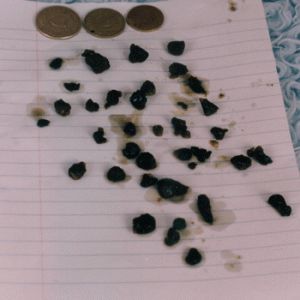
During the gallbladder flush apple juice is taken which is high in malic acid, which is thought to act as a solvent to weaken adhesions between solid globules. Epsom salts (magnesium sulphate) are used because it’s believed it relaxes smooth muscle and will relax and dilate the bile duct to enable larger solid particles (like gallstones) to exit the gallbladder. Unrefined olive oil is used to stimulate the gallbladder and bile duct to contract and expel gallstones. The image above shows the number of stones flushed from the gallbladder the first time around.
About 14 days after beginning her holistic treatment protocol she had another ultrasound scan which read: “the gallbladder is not as distended as on the previous examination, but there is now marked thickening of the gallbladder wall with an oedematous ring, indicating inflammation of the gallbladder wall. There is a large cluster of small calculi noted within the gallbladder, which is more clearly evident on today’s examination. There are no features of pancreatitis sonographically. The features are suggestive of less obstruction on today’s examination, but there is a complication of associated cholecystitis.”
The medical doctors again strongly encouraged her to go in for gallbladder surgery but she was adamant and managed to stall them further. When the gallbladder empties, as had occurred on the first flush, the stones left in the liver ducts will slowly make their way down into the gallbladder again. This can fill with stones AGAIN, and therefore more flushes are required – sometimes as many as 5-6 flushes are required to completely clear all the stones from the liver and gallbladder – this is why the scan showed more stones a couple of weeks after the initial flush. Had the scan been taken only a couple of days after the flush, then the chances are that it would have shown no stones, or very few.
She continued her supplements and towards the end of October 2008 she did another gallbladder flush and removed more smallish stones. Another blood analysis on the 21.10.09 which was a few days after her second gallbladder flush showed a marked decrease in hepatic enzymes back to normal levels: gamma-GT fell from 164 on last count to 36 (now about normal); AST from 188 to 18 (now normal) and ALT from 66 to 23 (now normal). These results had occurred within 6 weeks of beginning her holistic protocol.
Moreover, all the Acute Gallbladder Colic and pain had disappeared completely and she had no further problems after eating. In fact, she had lost considerable weight and her energy levels had greatly increased, her bowel distension was gone and generally she was feeling very well.
Patient’s own account:
I have been doing gallbladder flushes for some time, ever since I visited Dr. Georgiou in 2005. However, due to excessive stresses at work and at home, with a hectic lifestyle, I failed to look after myself over the last two to three years, eating anything but an optimum diet, not drinking enough water and generally putting on excess weight. This was not the advice that I received from Dr. Georgiou who mentioned doing a general body detox every 6 months with fruit and vegetables, as well as flushing the gallbladder at least once per year based on my previous history of gallstones and Acute Gallbladder Colic.
When I returned to Dr. Georgiou early September 2008 I was in a real state. I had lots of pain in the gut area that kept shooting up to my upper back, I was bloated most of the day and I was afraid to eat as the pain would get worse. I was also feeling tired and run down, so I went to see a medical doctor first to see whether it was what I suspected, gallstones again. Indeed, the ultrasound scan confirmed this, as did the blood tests where all my liver enzymes were sky high! When the doctor had completed his examination he was determined to get me into surgery the same day and actually called the surgeon there and then to book me an appointment that afternoon.
Even though I was worried as I knew that this was serious, I always had faith in natural medicine as I and my family had relied on it for many years and I really did not want my gallbladder whipped out. Over the years I have developed a sort of “allergy” towards medical doctors due to many of the mistakes and consequences that I have seen in other friends and family members.
I therefore called Dr. Georgiou who is normally very busy and puts you on a waiting list, but as soon as he heard my voice he recognized me and luckily he had a cancellation the same day. I did not hesitate and got my husband to drive me to Larnaca where we met. He looked at the results with a worried frown and said after a few minutes, well it looks like you are really close to surgery – why are you here? How can I help?
I told him quite categorically that I had no intention of being put under the knife and that I wanted to do another gallbladder flush under his supervision. He continued to tell me that my liver was under considerable stress as the liver enzymes had shot up, possibly because of an obstruction of the gallbladder ducts. However, he said that if we moved quickly and monitored the situation with the help of the medical doctor, we would see. He said that he had a similar case and they had succeeded, but each case has its own individual qualities. He said that the reassuring thing was that he knew me from previous consultations and that I was a good and well-behaved patient.
He immediately put me on an alkaline detoxification diet with supplements to help reduce my liver enzymes, as well as others to soften the gallbladder stones and asked to see me in a weeks time. By that time I began to feel better, so we decided to implement the first gallbladder cleanse which went well with no pain or complications. A few days later the blood tests had confirmed that my liver was improving by leaps and bounds and this was really encouraging. Dr. Georgiou advised that I continue the supplements and plan for another gallbladder flush soon.
By the time I completed the second flush at the end of October I was a new woman – all the pains had gone, as well as the bloating – I was eating normally now but within a more optimal diet (I got my knuckles wrapped by Dr. Georgiou on this), my energy and stamina had much increased and so had my overall moods which were much happier. My blood tests also showed that my liver enzymes were pretty normal, which relieved me considerably as this was very worrying. Dr. Georgiou was also again smiling!
I was elated and very happy to have saved myself the ordeal and expense of gallbladder surgery. I am also grateful to Dr. Georgiou for his faith in natural medicine and the results that it can bring to many patients like me. He really is a most caring and committed practitioner that finds amazing ways of getting people well, even with critical cases like mine.
Dr. Georgiou’s final comments on Mrs. K:
This was a most interesting case where natural medicine showed its power by healing the liver and gallbladder in a very short period of time, even in cases of Acute Gallbladder Colic. Even though I have personally supervised hundreds of gallbladder flushes, this one was a little “on the edge” due to the high liver enzymes and the possible blockage. However, with a positive attitude, a healthy optimism and a systematic approach, having faith in the power of natural healing remedies, as well as the innate healing forces of the body, it is amazing how healing miracles are performed.
It is important to state here that patients facing similar crises should not simply take their treatments into their own hands without the supervision of an experienced holistic practitioner, who will work with other medical specialists to carefully monitor the patient every step of the way.
——————————————————————————–
References
[2] Kraft K. Artichoke leaf extract – Recent findings reflecting effects on lipid metabolism, liver and gastrointestinal tracts. Phytomedicine 4(4):369-378, 1997.
[3] Matuschowski P. Testing of Cynara scolymus in the isolated perfused rat liver. 43rd Ann Congr Soc Med Plant Res 3-7, 1996.
[4] Kirchhoff R, Beckers CH, Kirchhoff GM, and et al. Increase in choleresis by means of artichoke extract. Phytomedicine 1:107-115, 1994.
[5] Zhao Y, Li H, Gao Z, Gong Y, Xu H. Effects of flavonoids extracted from Scutellaria baicalensis Georgi on hemin-nitrite-H2O2 induced liver injury. Eur J Pharmacol. 24;536(1-2):192-9, Apr 2006.
[6] Jang SI, Kim HJ, Hwang KM, Jekal SJ, Pae HO, Choi BM, Yun YG, Kwon TO, Chung HT, Kim YC. Hepatoprotective effect of baicalin, a major flavone from Scutellaria radix, on acetaminophen-induced liver injury in mice. Immunopharmacol Immunotoxicol. 25(4):585-94, Nov 2003.
[7] Ellenhorn MJ, et al. Ellenhorn’s Medical Toxicology: Diagnoses and Treatment of Human Poisoning. 2nd edition. Baltimore, MD. Williams & Wilkins, 1997.
[8] Ferenci P, Dragosics B, Dittrich H, et al. Randomized controlled trial of silymarin treatment in patients with cirrhosis of the liver. J Hepatol. 9:105-13, 1989.
Contact us or book an appointment now.