
Book a consultation

Home IDEL Diagnostic Programme Heart Rate Variability (HRV) Testing

IDEL test 11 of 13

Heart Rate Variability (HRV) testing

Heart rate variability (HRV) testing is a non-invasive method that assesses the variations in time intervals between consecutive heartbeats. By measuring these fluctuations, HRV testing provides valuable insights into the autonomic nervous system’s activity, overall cardiovascular health, and stress response.

R-R interval
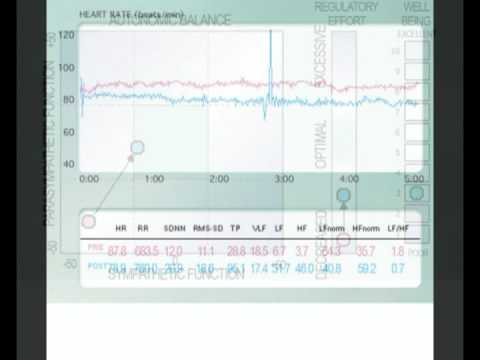
Heart rate variability test results on screen An HRV test report
2branches of the autonomic nervous system: sympathetic and parasympathetic
15thheartbeat: heart rate at its maximum after standing
30thheartbeat: the relative bradycardia at its maximum
30:15the ratio that quantifies the response

01Understanding heart rate variability testing

The variation between heartbeats

Heart rate variability (HRV) testing is a non-invasive method that assesses the variations in time intervals between consecutive heartbeats. By measuring these fluctuations, HRV testing provides valuable insights into the autonomic nervous system’s activity, overall cardiovascular health, and stress response. In this article, we explore the benefits of HRV testing for individuals with health problems and discuss the conclusions that can be drawn from this test.

Heart rate variability refers to the variation in the time intervals between successive heartbeats. The autonomic nervous system, comprised of the sympathetic and parasympathetic branches, regulates heart rate and responds to stressors. HRV testing measures these fluctuations, typically using electrocardiogram (ECG) data, to evaluate the balance and flexibility of the autonomic nervous system.

02Benefits of HRV testing

For people with health problems

Stress Assessment and Management

HRV testing is particularly valuable in assessing an individual’s stress response. It provides insights into the balance between sympathetic (fight-or-flight) and parasympathetic (rest-and-digest) activity. By monitoring HRV patterns, individuals can gain a better understanding of their stress levels and implement effective stress management techniques to support overall well-being.
Cardiovascular Health Evaluation

HRV testing offers an indirect evaluation of cardiovascular health. Reduced HRV is associated with an increased risk of cardiovascular diseases such as hypertension, heart disease, and arrhythmias. By assessing HRV, individuals can identify potential imbalances and take proactive steps to improve heart health through lifestyle modifications, exercise, and stress reduction techniques.

Autonomic Nervous System Function

HRV testing provides insights into the functioning of the autonomic nervous system, which plays a crucial role in regulating various bodily functions. Imbalances in autonomic function can be associated with conditions such as digestive disorders, sleep disturbances, hormonal imbalances, and immune system dysregulation. HRV testing helps identify potential autonomic dysfunction and guide targeted interventions.

Training Optimization for Athletes

HRV testing is utilized in sports performance monitoring and optimization. It helps athletes determine their readiness for training, assess recovery levels, and tailor exercise intensity and duration to prevent overtraining and injury. By tracking HRV patterns, athletes can optimize their training regimens to enhance performance while minimizing the risk of burnout.

03A typical HRV report

The orthostatic test

At the Da Vinci Natural Health Centre we use the Orthostatic Test when measuring HRV. During the test, the patient rises from a supine to a standing position. Normally this causes an immediate increase in heart rate and reaches its maximum level at about 15th heartbeat after beginning to stand. It is followed by a relative bradycardia that reaches its maximum around the 30th heartbeat. The phenomena can be quantified as the 30:15 ratio, which is the ratio of the longest R-R interval around the 30th heartbeat to the shortest interval around the 15th heartbeat.

The orthostatic test heartbeatsheart rate supine standing 15th heartbeat 30th heartbeat 30:15 ratio

04Conclusions drawn from HRV testing

What your HRV tells us

01

Sympathetic-Parasympathetic Balance

HRV testing provides insights into the balance between sympathetic and parasympathetic nervous system activity. Higher HRV indicates a healthy balance between these branches, promoting resilience, adaptability, and optimal physiological function. Reduced HRV may suggest an imbalance, indicating the need for interventions to restore autonomic equilibrium.

02

General Health Status

HRV patterns can reflect an individual’s overall health status. Reduced HRV is associated with chronic conditions, inflammation, and increased disease risk. Monitoring HRV can assist in tracking changes and evaluating the effectiveness of health interventions and lifestyle modifications.

03

Stress Resilience

HRV testing helps assess an individual’s resilience to stress. Higher HRV indicates better adaptability and a more efficient stress response system. Lower HRV may suggest a reduced ability to cope with stressors, highlighting the need for stress management strategies and lifestyle adjustments.

04

Treatment Response Evaluation

HRV testing can be used to assess the effectiveness of interventions. By monitoring HRV over time, individuals and healthcare professionals can gauge how interventions, such as stress reduction techniques, exercise, medication, or lifestyle changes, impact autonomic function and overall health.

Watch

Heart rate variability on video

References

  • Kawachi I, Sparrow D, Vokonas PS, Weiss ST. Decreased heart rate variability in men with phobic anxiety. Am J Cardiol 1995; 75: 882-885.
  • Kristal-Boneh E, Raifel M, Froom P, Ribak J. Heart rate variability in health and disease. Scan J Work Environ Health 1995; 21: 85-95.
  • Offerhaus RE. Heart rate variability in psychiatry. In: RJ Kitney, Rompelman O (eds). The Study of Heart Rate Variability. Oxford: Oxford University Press, 1980: 225-238.
  • Sloan RP, Shapiro PA, Bigger T Jr, Bagiella E, Steinman RC, Gorman JM. Cardiac autonomic control and hostility in healthy subjects. Am J Cardiol 1994; 74: 298-300.
  • Task Force of the European Society of Cardiology and the North American Society of Pacing and Electrophysiology. Heart rate variability: standards of measurement, physiological interpretation and clinical use. Circulation 1996; 93: 1043-65.
  • Yeragani VK, Balon R, Pohl R, Ramesh C, Glitz D, Weinberg P, Merlos B. Decreased R-R variance in panic disorder patients. Acta Psychiatr Scand 1990; 81: 554-559.
  • Yeragani VK, Pohl R, Berger R, Balon R, Ramesh C, Glitz D, Srinivasan K, Weinberg P. Decreased heart rate variability in panic disorder patients: a study of power-spectral analysis of heart rate. Psychiatry Res 1993; 46: 89-103.

↑↓ to chooseEnter to openEsc to close